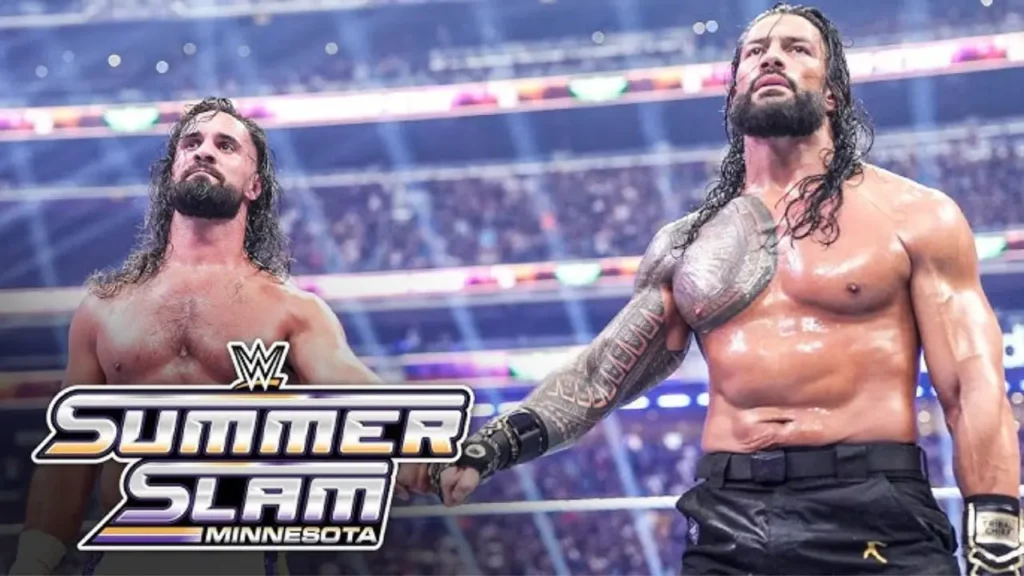
In the charged atmosphere of U.S. Bank Stadium in Minneapolis, SummerSlam 2026 delivered one of its most memorable multi-man contests on Night 2 when Finn Bálor, Sami Zayn, Gunther, and a returning Kevin Owens collided in a fatal four-way. What began as a high-stakes battle for supremacy—and potentially a clear path toward championship gold—exploded into a showcase of resilience, opportunism, and pure wrestling excellence that left the WWE Universe buzzing long after the final bell.
The match’s roots stretched back through months of escalating tension on SmackDown. Sami Zayn had finally achieved the impossible at Night of Champions in late June, capturing the Undisputed WWE Championship in a triple threat by pinning Cody Rhodes with Gunther also in the mix. After more than a decade of near-misses and heartbreaking close calls, the Underdog from the Underground stood tall as champion. Yet the celebration was short-lived. Gunther, the imposing Ring General still stinging from that loss and subsequent setbacks, made it clear he viewed Zayn’s reign as temporary. Meanwhile, Finn Bálor, recently traded to SmackDown and hungry to reassert himself as a major singles force after years of faction drama and midcard limbo, positioned himself as a legitimate threat. Their heated exchanges on SmackDown built genuine anticipation for a potential one-on-one clash.
Then SummerSlam arrived and rewrote the script. On Night 1, Gunther methodically dismantled Nick Aldis, forcing the former authority figure to tap out and further cementing his status as a dangerous free agent. The real shock, however, came on Night 2. Moments before the four-way was set to begin, the match was expanded. Kevin Owens—absent from in-ring competition for roughly 17 months after a serious neck and spinal injury that required surgery and nearly ended his career—made an emotional return. The Minneapolis crowd erupted as the Prizefighter stormed the ring, instantly elevating the bout from intriguing to historic.
What followed was a masterclass in multi-man dynamics. The early stages featured classic alliances of convenience that dissolved the second an opportunity presented itself. Bálor and Zayn, two technical wizards with deep history, traded crisp sequences of kicks, submissions, and near-falls. Gunther, true to form, imposed his will with thunderous chops that echoed through the stadium and power moves that left opponents gasping. Owens, operating with the urgency of a man who had stared down the end of his career, brought a frenetic, high-risk energy—diving, brawling, and capitalizing on every opening.
The storytelling within the match was layered. Zayn, as the reigning champion, found himself targeted from all sides, forced to fight not only for survival but to prove his title reign would not be a fleeting footnote. Bálor, sharp and opportunistic, looked to seize the moment that could catapult him back into the main-event conversation after his SmackDown transition. Gunther treated the bout like a personal crusade, methodically breaking down anyone who stood between him and another shot at gold. Owens, however, wrestled like a man with nothing left to lose and everything to prove. His presence alone added emotional weight; every near-fall or big move carried the subtext of a hard-fought recovery.
Momentum swung wildly. There were moments when Gunther appeared poised to dominate, only for a well-timed Coup de Grâce or Helluva Kick to shift the balance. Zayn’s resilience shone through as he absorbed punishment and answered with signature offense. Bálor’s aerial precision created several close calls that had the crowd on edge. Yet it was Owens who ultimately seized the decisive moment. In a chaotic final sequence, he planted Zayn with a Stunner and scored the pinfall victory, announcing his return in the most emphatic way possible.
The result carried significant implications. Owens’ win instantly inserted him into the championship picture and set up potential collisions with the likes of CM Punk, who held the Undisputed title picture in flux around that time. For Zayn, the loss was a setback in what had been a fairy-tale year, but one that underscored the brutal reality of holding gold in a stacked division. Gunther remained a looming threat—disciplined, dominant, and never far from the top of the card. Bálor, while left without the victory, reminded everyone of his elite ability and left the door open for future high-profile opportunities, including rumored aspirations involving Punk.
Beyond the result, the match succeeded because it felt consequential. It was not merely four talented performers filling time; it was a collision of personal narratives. Zayn’s long-awaited triumph, Gunther’s relentless pursuit of supremacy, Bálor’s reinvention on a new brand, and Owens’ triumphant recovery from a career-threatening injury all converged under the SummerSlam spotlight. The pacing was excellent, the near-falls were earned, and the physicality felt authentic without descending into pure chaos for its own sake.
In the broader context of SummerSlam 2026—a two-night stadium spectacle in Minneapolis—this fatal four-way stood out as a highlight that balanced star power with storytelling. It reinforced WWE’s ability to capitalize on unexpected returns and shifting alliances while delivering the kind of match that fans discuss for weeks. Owens walking out with the win did not close chapters so much as open new ones. Zayn’s championship journey continued under new pressure. Gunther’s path to another major title opportunity remained clear. And Bálor proved once again that when given the platform, he can hang with the very best.
SummerSlam has long been a stage for defining moments. On this night in Minnesota, four competitors delivered one that felt both inevitable in its intensity and surprising in its outcome. The Prizefighter was back, the contender ranks had been thoroughly shaken, and the road toward the next major premium live event already looked more unpredictable—and more exciting—than before. In a year already marked by major title changes and roster shifts, this four-way ensured that the conversation around WWE’s upper midcard and main event scene would remain loud, passionate, and far from settled.